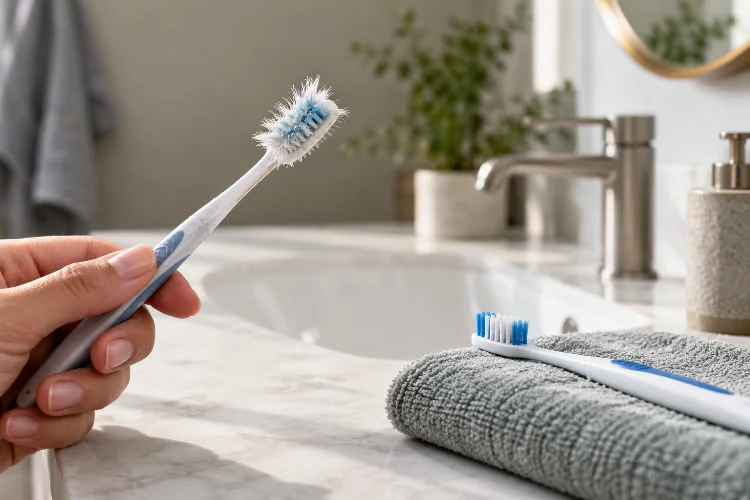
You probably use your toothbrush every morning and every night without giving it much thought. But take a close look at the bristles. Are they still straight and firm enough to clean properly, or are they bent, flattened, and pointing in every direction?
Knowing how often should you replace your toothbrush is a small but important part of maintaining good oral hygiene.
A toothbrush does not last forever. With repeated use, its bristles gradually wear down, making it less effective at removing plaque and food debris from your teeth and along the gumline.
The American Dental Association recommends replacing a toothbrush approximately every three to four months, or sooner when the bristles become visibly frayed or matted.
That timeline applies to both traditional toothbrushes and replacement heads for electric models. However, your brushing technique, storage habits, health, and even how hard you brush can determine whether you need a new one earlier.
Here’s how to know when it is time for a replacement.
The General Rule: Replace It Every Three to Four Months
For most adults and children, three to four months is a useful maximum lifespan for a toothbrush.
The ADA recommends this interval because toothbrush bristles gradually deteriorate with normal use. Once they become worn, they may not clean tooth surfaces as effectively as they did when new.
Think about how much work a toothbrush performs during those months.
If you follow the standard recommendation to brush twice a day for two minutes, a toothbrush used for three months may go through roughly 180 brushing sessions. That means thousands of repeated movements against enamel, gumlines, dental fillings, and other surfaces.
Eventually, the bristles lose their original shape.
You do not need to wait until exactly day 90 before buying a new brush. The three-to-four-month recommendation is a general guideline rather than an expiration date. If your brush looks worn after six weeks, replacing it earlier makes more sense than waiting.
Frayed Bristles Mean It Is Time for a New Toothbrush
The calendar is useful, but your toothbrush itself can tell you when it needs replacing.
Take a look at the bristles from the side and from above. A relatively new toothbrush should have bristles that remain organized and maintain their intended shape.
When they begin bending outward, flattening, separating, or becoming heavily matted, cleaning performance can decline. The ADA specifically recommends replacing a toothbrush sooner than three or four months when the bristles become frayed.
What Worn Bristles Can Tell You About Your Brushing
If your toothbrush consistently looks destroyed after only a few weeks, the problem may not be the brush.
You could be brushing too aggressively.
Scrubbing harder does not necessarily mean your teeth become cleaner. The ADA recommends using a soft-bristled toothbrush with gentle pressure, partly because excessive force may contribute to irritation or damage around the gums.
Instead of pressing aggressively, focus on controlled movements and thorough coverage of the inner, outer, and chewing surfaces.
A toothbrush should wear gradually-not look like its brissles survived a storm after two weeks.
Do Electric Toothbrush Heads Need Replacing Too?
Yes.
Electric toothbrushes may look more advanced, but their bristles still experience normal mechanical wear. Replacement heads should generally be changed on a similar three-to-four-month schedule, or sooner if their bristles become damaged or frayed.
Both manual and powered toothbrushes can effectively remove plaque when they are used correctly.
Some electric toothbrush heads include indicator bristles that gradually change appearance with use. These can provide a helpful reminder, but you should still examine the actual condition of the brush head rather than relying entirely on color.
If the bristles are spreading outward or no longer feel effective, replace the head.
The motor may still work perfectly, but it cannot compensate for badly worn bristles.
Should You Replace Your Toothbrush After Being Sick?
This is one of the most common toothbrush questions.
You may have heard that you should automatically throw away your toothbrush after every cold, flu, or sore throat. Current ADA consumer guidance says this is generally unnecessary for most healthy people because reinfection from your own toothbrush is unlikely.
There are exceptions.
The ADA notes that toothbrush replacement may deserve more consideration for people who are severely immunocompromised or in certain situations where toothbrushes have been stored together during illness and cross-contamination is possible.
If your brush was already approaching the three-to-four-month replacment point, recovering from an illness can also be a convenient time to switch to a fresh one.
More importantly, never share toothbrushes, especially when someone is sick. Sharing can transfer microorganisms and bodily fluids between users.
Proper Storage Can Help Keep Your Toothbrush in Better Condition
How you treat your toothbrush between brushing sessions also matters.
After brushing, rinse it thoroughly under tap water to remove toothpaste and debris. Then store it upright where it can air-dry.
Avoid routinely sealing a wet toothbrush inside a closed container. A damp, enclosed environment can encourage more microbial growth than allowing the brush to dry in open air.
If several family members keep toothbrushes in the same holder, try to prevent the brush heads from touching each other.
Do You Need to Sterilize Your Toothbrush?
Usually, elaborate sterilization is unnecessary.
The ADA notes that toothbrushes can harbor bacteria, but there is no evidence that the bacteria typically found on toothbrushes cause adverse health effects in normal use.
Trying to disinfect a toothbrush using boiling water, a microwave, or a dishwasher can also damage it.
Simple maintainance is generally enough: rinse it well, store it upright, allow it to dry, and replace it regularly.
Children May Need New Toothbrushes More Frequently
The three-to-four-month guideline applies to children too, but their toothbrushes sometimes wear out faster.
Young children may bite or chew on the toothbrush head while learning to brush. They may also use uneven pressure, causing bristles to bend much earlier than expected.
Parents should check children’s brushes regularly rather than relying only on the date.
The ADA recommends that tooth brushing begin as soon as a child’s first tooth erupts, with caregivers providing assistance or supervision while children develop the necessary skills.
A child should also use an appropriately sized toothbrush with soft bristles.
If the brush head becomes damaged from chewing, replace it-even if you only bought it recently.
Why Toothbrush Quality Matters More Than Keeping It Forever
It can be tempting to keep a toothbrush until it looks completely unusable, especially if it still technically has bristles attached.
But your toothbrush is a tool.
You would not keep using a kitchen sponge, razor, or cleaning brush indefinitely once it stopped performing properly. The same principle applies to oral care.
A good toothbrush helps remove plaque, the sticky bacterial film that continuously forms on teeth. Regular plaque removal supports cavity prevention and healthy gums when combined with fluoride toothpaste and interdental cleaning.
The ADA recommends brushing twice daily for two minutes with fluoride toothpaste and cleaning between the teeth daily.
Replacing a worn toothbrush helps make those daily brushing sessions worthwhile.
An Easy Way to Remember When to Replace Your Toothbrush
If you constantly forget when you bought your toothbrush, build replacement into your routine.
One easy strategy is to replace it at the beginning of every new season-roughly every three months. Another option is to create a recurring reminder on your phone or calendar.
You can also write the month you started using the brush somewhere on its packaging or keep spare toothbrushes at home so there is always a replacement available.
For electric toothbrush users, keeping several replacement heads in the bathroom cabinet can prevent the temptation to stretch one worn head for another few months.
Still, do not let the calendar override common sense.
If the bristles become badly bent, contaminated, damaged, or worn before your reminder appears, change the toothbrush immediately.
The easiest rule to remeber is simple: three to four months is the maximum target, but visible wear means replace it sooner.
How to Make Your Toothbrush Last Without Overusing It
You cannot prevent normal toothbrush wear, but good habits can keep your brush functioning properly throughout its intended lifespan.
Use gentle pressure rather than scrubbing aggressively. Choose soft bristles, rinse the brush thoroughly after every use, and allow it to dry upright.
Do not share your toothbrush, and avoid leaving it sealed inside a damp travel case for long periods.
When traveling, a cover can protect the toothbrush from contact with other objects, but allow the brush to dry whenever possible after reaching your destination.
These habits will not make a toothbrush last forever-and they should not. They simply help it remain clean and functional until the appropriate replacement time arrives.
So, how often should you replace your toothbrush? For most people, the answer is every three to four months. However, damaged, flattened, or frayed bristles are a clear reason to replace it sooner.
The same basic guideline applies to manual brushes and electric toothbrush heads. Proper storage, gentle brushing, thorough rinsing, and allowing the brush to air-dry can help keep it in good condition between replacements.
Remember that a fresh toothbrush is only one part of effective oral hygiene. Brush twice daily for two minutes with fluoride toothpaste, clean between your teeth, and maintain regular dental visits.
Take a look at your toothbrush today. If the bristles are bent, spread out, or you cannot remember when you bought it, it may be time to give your bathroom cup a fresh upgrade.