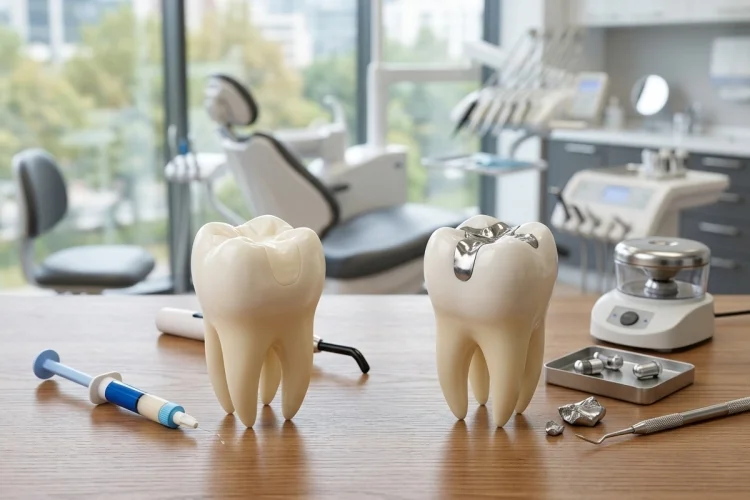
When a dentist says you need a filling, the next question is often, “Which type should I choose?” Two of the most familiar options are tooth-colored composite resin and silver-colored dental amalgam.
In the composite vs. amalgam fillings debate, neither material is automatically the best choice for every patient or every tooth. Composite blends naturally with your smile and bonds to the tooth, making it popular for visible areas.
Amalgam is less discreet, but it has a long history of strength and may perform well in areas exposed to heavy chewing or difficult moisture control.
Your dentist will consider the cavity’s size, its position, the condition of the remaining tooth, your bite, appearance preferences, health history, local regulations, and treatment cost.
Understanding the main differences can help you ask better questions and make an informed decision rather than choosing based only on color.
What Are Composite and Amalgam Fillings?
A dental filling repairs a cavity after damaged tooth tissue has been removed or otherwise managed. The restoration closes the space, rebuilds the tooth’s shape, and helps it function during biting and chewing.
1. Composite Fillings
Composite fillings are commonly called white or tooth-colored fillings. They are generally made from a resin matrix combined with inorganic filler particles and a coupling agent that helps the ingredients work together.
The material is available in different shades, allowing the dentist to select a color that closely matches the surrounding enamel. Many composites are placed in layers and hardened with a special curing light.
2. Amalgam Fillings
Dental amalgam is a metallic restorative material containing elemental mercury combined with an alloy of silver, tin, and copper. Approximately half of the material is mercury by weight, which binds the other metals together into a solid restoration.
Amalgam is often called a silver filling because of its appearance. However, it contains several metals rather than silver alone.
Appearance Is the Most Noticeable Difference
Composite has the clear cosmetic advantage. Because it can be matched to the tooth, it is much less noticeable when you smile, laugh, or speak.
This makes composite resin especially popular for front teeth and other visible areas. It can also be used on premolars and molars when the clinical conditions are suitable.
Amalgam remains visibly silver or gray and may become darker over time. For a cavity near the back of the mouth, appearance may not matter much. For a visible tooth, however, many patients prefer a restoration that blends into their smile.
The most natural-looking option is not automatically the strongest or most practical one. The final choice should balance appearance with the demands placed on the tooth.
How the Materials Attach to a Tooth
Composite fillings use an adhesive bonding system. The dentist prepares the tooth, applies the necessary bonding agents, places the resin, and usually cures it with light.
Because composite bonds to tooth structure, it can often be used with a relatively conservative preparation. The dentist still needs to remove unsupported or damaged tissue, but extensive shaping for mechanical retention may not always be necessary.
Traditional amalgam does not bond to enamel and dentin in the same way. The prepared cavity is shaped so the hardened material remains securely in position.
The dentist mixes the encapsulated material, places it into the preparation, condenses it, and shapes the biting surface.
The amount of tooth structure removed depends on the cavity rather than the material alone. A large, weakened, or fractured tooth may need a crown instead of either type of direct filling.
Which Filling Is More Durable?
Amalgam has a long record of durability and is particularly useful in teeth exposed to heavy chewing forces.
The American Dental Association notes that evidence generally gives amalgam an advantage in survivability and longevity compared with resin composite restorations.
That does not mean composite fillings are fragile. Modern resin materials can perform well in front and back teeth, particularly when the cavity is not excessively large and the filling can be placed under suitable conditions.
The lifespan of either restoration depends on several factors. Cavity size, tooth position, biting pressure, teeth grinding, placement technique, diet, oral hygiene, and decay around the filling’s edges can all affect how long it lasts.
For example, a small composite filling on a well-cleaned tooth may last longer than a large amalgam restoration in someone who grinds heavily. Material matters, but it is only one part of long-term success.
Moisture and Placement Time Matter
Composite placement is relatively technique-sensitive. Saliva or moisture can interfere with the bonding process, so the tooth normally needs to remain well isolated while the dentist works.
The material is often placed in stages, with each layer carefully shaped and cured. This can make the procedure more time-consuming, especially for a large cavity on a back tooth.
Amalgam does not depend on adhesive bonding and may be useful when keeping the treatment area completely dry is difficult. The FDA also identifies moisture-challenging situations and large preparations among the circumstances where amalgam may offer practical benefits.
These differences can influence treatment for children, back molars, teeth close to the gumline, or patients who find it difficult to keep their mouth open for extended periods.
Are Composite and Amalgam Fillings Safe?
Both materials have been widely studied, but amalgam receives more attention because it contains mercury. The FDA states that available evidence does not show that amalgam exposure causes harmful health effects in the general population.
However, the FDA encourages non-amalgam alternatives when appropriate for pregnant women, those planning pregnancy, nursing mothers, young children-especially those under six-and people with kidney impairment, neurological disease, or an allergy to amalgam components.
The FDA does not recommend removing an intact amalgam filling simply to prevent illness. Unnecessary removal sacrifices healthy tooth tissue and temporarily increases mercury-vapor exposure during the procedure.
Composite materials are generally well tolerated, although rare sensitivities can occur. They may also shrink slightly while curing, so careful technique is needed to minimize gaps at the edge of the restoration.
Cost and Availability Can Be Different
Amalgam has traditionally been one of the least expensive direct filling materials. Composite may cost more because the material, bonding system, placement time, and equipment can make the procedure more complex.
Actual prices vary widely by country, clinic, insurance coverage, cavity size, and tooth position. In some healthcare systems, tooth-colored fillings may be covered only in certain situations.
Availability is also changing. New amalgam fillings have been banned across the European Union since January 1, 2025, while the United Kingdom continues a phasedown and permits amalgam when clinically justified. Regulations and ordinary dental practice may differ elsewhere.
Patients should therefore ask which options are legally available, clinically suitable, and included in their insurance or public dental benefits.
How Does a Dentist Choose the Right Material?
The dentist begins by looking at the tooth itself. A composite filling may be preferred when appearance is important, the cavity can be kept dry, and sufficient tooth structure remains for predictable bonding.
Amalgam may be considered where it remains available and appropriate, particularly for a heavily loaded back tooth, a large preparation, or a situation where moisture control is difficult.
Your health history matters as well. Tell the dentist about pregnancy, breastfeeding, kidney disease, neurological conditions, known metal allergies, teeth grinding, and previous reactions to dental materials.
A useful discussion should cover appearance, likely durability, tooth preservation, placement requirements, safety, price, and available alternatives. The best filling is the one that suits the specific tooth and patient-not simply the material that is most popular.
Caring for Either Type of Filling
Composite and amalgam fillings can both develop wear, cracks, or decay around their edges. Neither option lasts forever, and either may eventually need repair or replacement.
Brush twice daily with fluoride toothpaste and clean between your teeth regularly. Reducing frequent sugary snacks and drinks also helps protect the tooth around the restoration.
Contact your dentist if the filling feels loose, develops a sharp edge, causes persistent pain, or suddenly feels too high when you bite. Early assessment may allow a small repair before the tooth becomes more seriously damaged.
Composite fillings are tooth-colored, adhesive, and usually preferred when appearance is a priority.
Amalgam fillings are metallic, durable, relatively economical, and may work well under heavy chewing forces or challenging moisture conditions where their use remains available.
Neither material is ideal for every cavity. Tooth position, damage size, bite pressure, moisture control, medical history, cost, and local regulations all influence the decision.
Ask your dentist to explain why a particular restoration is recommended and what alternatives are suitable. Once the filling is placed, protect it with consistent brushing, interdental cleaning, sensible sugar habits, and regular checkups.
An informed choice and good daily care can help the repaired tooth remain comfortable and functional for years.