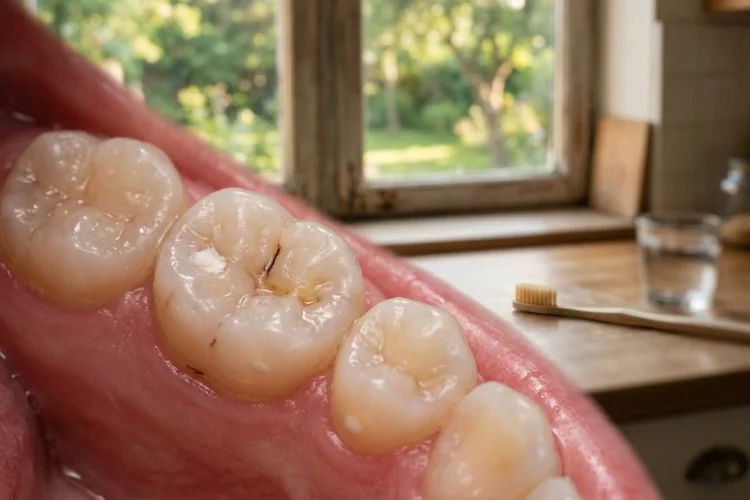
Cavities rarely begin with dramatic pain. In fact, tooth decay can develop quietly for months while the affected tooth still looks and feels almost normal. By the time a toothache appears, the damage may have already moved beyond the protective enamel.
Recognizing the early warning signs of a cavity gives you a better chance of dealing with the problem before it becomes larger, more painful, and more expensive to treat.
A chalky white patch, mild sensitivity, or a small change in tooth color may seem harmless, but these changes can sometimes signal that minerals are being lost from the enamel.
The tricky part is that not every stain or sensitive tooth means you have decay. Similar symptoms can be caused by gum recession, worn enamel, dental erosion, or a cracked filling.
That is why unusual changes should be checked by a dentist rather than diagnosed at home. Knowing what to look for can help you act early and protect more of your natural tooth.
Cavities Often Have No Symptoms at First
One of the most important facts about early tooth decay is that you may not feel anything at all. Enamel, the hard outer layer of a tooth, does not contain nerves. Damage can therefore begin without causing pain.
During this stage, acids produced by bacteria in dental plaque gradually remove minerals from the enamel. Your saliva and fluoride may replace some of those minerals, but repeated acid attacks can eventually overwhelm this natural repair process.
This is why waiting for a toothache is not a reliable dental-care strategy. Regular examinations allow a dentist to identify suspicious changes before you notice obvious symptoms.
Some decay, especially between teeth, may only be visible during an examination or on a dental X-ray.
A Chalky White Spot on the Tooth
A white spot can be one of the earliest visible signs of tooth decay. It often appears dull, chalky, or more opaque than the surrounding enamel.
This change develops when the enamel loses minerals, a process known as demineralization. At this point, the surface may still be intact, meaning an actual hole has not yet formed.
Early mineral loss may sometimes be stopped or reversed with fluoride, better plaque control, dietary changes, and professional dental care. Once the enamel surface breaks down and a cavity forms, however, the tooth usually requires restorative treatment.
Not every white mark is decay. Dental fluorosis, enamel-development conditions, and old injuries can also cause pale spots. A dentist can determine whether the area is active tooth decay or simply a harmless change in appearance.
New Brown or Dark Spots
Tooth decay may also appear as a light brown, dark brown, or black mark. These areas can develop in the grooves of back teeth, near the gumline, or between neighboring teeth.
A dark mark does not automatically mean there is a cavity. Coffee, tea, tobacco, and certain foods can stain the enamel, while deep grooves may naturally look darker than the rest of the tooth.
The warning sign is more concerning when the spot is new, becomes larger, feels rough, or appears in an area where food repeatedly becomes trapped. NIDCR lists white, brown, and black staining among the visible signs dentists may look for when checking for decay.
Avoid trying to scrape or aggressively brush away a dark mark. Hard scrubbing will not remove internal decay and may irritate your gums or wear the tooth surface.
Sensitivity to Sweet, Cold, or Hot Foods
A brief sharp sensation when eating ice cream or drinking a cold beverage can be an early clue that the protective surface of a tooth has become weakened.
As decay moves through enamel and approaches the softer dentin underneath, temperature changes and sugary foods may stimulate the tooth more easily. NIDCR notes that sensitivity to sweets, heat, or cold can develop as tooth decay advances.
Pay attention to how long the sensation lasts. Mild sensitivity that disappears immediately may have several possible causes, including gum recession or worn enamel.
Pain that continues after the food or drink has been removed may suggest deeper irritation and should be evaluated promptly.
Sensitivity toothpaste may reduce certain symptoms, but it does not remove decay. Repeatedly covering up discomfort without identifying its cause can allow the underlying problem to worsen.
Food Frequently Getting Stuck in One Spot
Food occasionally becomes trapped between teeth, especially after eating fibrous meat, seeds, or popcorn. However, food that repeatedly collects in the same location may deserve attention.
A cavity can change the shape or surface of a tooth, creating a small space where food becomes lodged. A damaged filling, cracked tooth, or open contact between teeth can cause a similar problem.
You may also notice that dental floss catches, frays, or tears in one particular area. This does not prove that decay is present, but it can indicate a rough surface or damaged restoration that needs professional examination.
Do not stop flossing simply because the area feels uncomfortable. Clean it gently and arrange a dental appointment if the problem continues.
A Rough Area, Small Pit, or Visible Hole
Running your tongue over your teeth may reveal a surface that feels rough, sharp, or different from usual. In some cases, you might notice a small pit or opening.
A visible hole usually means the enamel surface has already broken down. At this stage, the damage is no longer considered the earliest phase of decay and normally cannot be repaired through brushing alone.
Dentists typically remove the damaged tissue and restore the tooth with a filling.
Avoid testing a suspected cavity with pins, fingernails, or other sharp objects. This may damage the tooth, irritate the gums, or push debris deeper into the area.
A cavity can also be hidden beneath the surface or located between teeth, so the absence of a visible hole does not guarantee that the tooth is healthy.
Mild Toothache or Discomfort When Biting
An occasional unexplained ache can be another warning sign. The discomfort may feel dull, come and go, or appear only when biting down on a particular tooth.
As a cavity grows closer to the nerve-containing center of the tooth, pain and sensitivity generally become more likely. The CDC notes that cavities tend to cause more discomfort as they become larger and approach the nerve.
Pain when chewing can also result from a crack, loose filling, gum problem, or an uneven bite. Because these conditions require different treatments, a dental examination is important.
Do not wait until the discomfort becomes severe or keeps you awake at night. Earlier treatment is usually simpler and may preserve more healthy tooth tissue.
Symptoms That Suggest the Decay Is Becoming Serious
Severe toothache, facial swelling, fever, or a bad taste near a painful tooth are not subtle early warnings. They may indicate that bacteria have reached the dental pulp and caused an infection or abscess.
An abscess is a pocket of pus that can form around an infected tooth. Dental infections can spread beyond the tooth if they are not treated.
Seek urgent dental or medical care for facial swelling, fever, severe pain, or difficulty opening your mouth. Trouble swallowing or breathing requires immediate emergency attention.
Painkillers may temporarily reduce discomfort, but they do not eliminate the infected tissue or repair the damaged tooth.
Why Early Detection Makes Such a Difference
Tooth decay develops in stages. When mineral loss is identified before a hole forms, fluoride and improved oral care may help the enamel recover.
A dentist may recommend fluoride varnish, a higher-fluoride product, changes to snacking habits, or more frequent monitoring depending on your cavity risk. Fluoride supports remineralization and makes enamel more resistant to future acid attacks.
Once decay progresses into a physical cavity, a filling is usually needed. Deeper damage may require a crown, root canal treatment, or extraction.
Early diagnosis can therefore mean less discomfort, less drilling, lower treatment costs, and a better chance of keeping the natural tooth strong.
How to Lower Your Risk of Future Cavities
Brush twice a day with fluoride toothpaste, taking around two minutes to clean the outer, inner, and chewing surfaces. Pay particular attention to the gumline and the back molars.
Clean between your teeth daily using floss, interdental brushes, or another suitable device. Toothbrush bristles cannot fully reach the narrow spaces where hidden cavities often begin.
Try to reduce how frequently you consume sugary snacks and drinks. Repeated sugar exposure gives plaque bacteria more opportunities to produce enamel-damaging acids.
Regular dental check-ups are also essential because early decay may not produce visible or painful symptoms. The right appointment schedule depends on your age, dental history, medical conditions, saliva flow, and personal level of risk.
The early warning signs of a cavity can be easy to miss. A chalky white patch, new dark spot, mild sensitivity, rough surface, recurring food trap, or occasional ache may be the first indication that a tooth needs attention.
However, early decay often causes no symptoms at all. Regular dental examinations remain the most dependable way to find problems before they become painful or require complex treatment.
Check your teeth regularly, maintain a consistent fluoride-based oral-care routine, and avoid ignoring small changes.
When a mark, sensitivity, or discomfort persists, book a dental examination rather than waiting for severe pain. Acting early can help preserve more of your tooth and keep your smile healthier for longer.