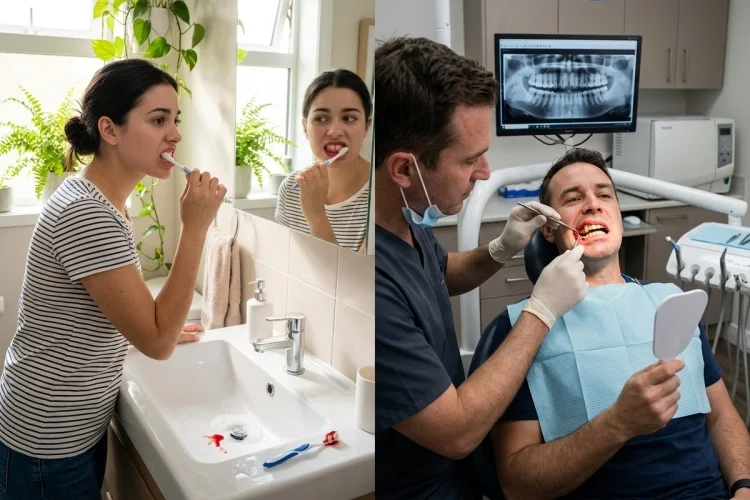
Seeing a little blood in the sink after brushing may not feel like a major problem. You might assume that you pressed too hard or that your gums are simply sensitive. However, regular gum bleeding can be an early sign of inflammation that deserves attention.
When comparing gingivitis vs. periodontitis, the biggest difference is the depth of the damage. Gingivitis is the mild, early stage of gum disease. It mainly affects the soft gum tissue and can usually be reversed with effective oral hygiene and professional cleaning.
Periodontitis is more advanced. The inflammation has moved below the gumline and begun damaging the tissues and bone that support the teeth. Although treatment can control the condition and slow its progression, lost bone and attachment cannot simply grow back through brushing alone.
Understanding the difference can help you recognize warning signs, seek treatment earlier, and avoid preventable tooth loss.
Gingivitis and Periodontitis in Simple Terms
Gingivitis is inflammation limited mainly to the gums. The tissue may become red, swollen, tender, or likely to bleed during brushing and interdental cleaning. There is usually little pain, and the bone supporting the teeth remains intact.
Periodontitis is a chronic inflammatory condition affecting the deeper structures around the teeth. These include the periodontal ligament, root-supporting tissues, and alveolar bone.
As the condition progresses, gums may pull away from the teeth and create deeper spaces called periodontal pockets. Bacteria and tartar can collect inside these pockets, contributing to further inflammation and bone loss. Teeth may eventually loosen, shift, or require removal.
In other words, gingivitis affects the gums at the surface, while periodontitis damages the foundation that holds the teeth in place.
How Plaque Leads to Gum Disease
Dental plaque is a sticky film containing bacteria that continuously forms on the teeth. When it is not removed through brushing and cleaning between the teeth, it can irritate the gumline and trigger an inflammatory response.
This early inflammation is gingivitis. For example, someone who brushes the visible front surfaces but regularly misses the gumline and spaces between the molars may notice swelling or bleeding in those neglected areas.
Plaque that remains for too long can harden into tartar, also known as calculus. Tartar cannot be removed with an ordinary toothbrush and must be cleaned away by a dentist or dental hygienist.
Untreated gingivitis can progress to periodontitis, although progression is not inevitable in every person.
When harmful bacteria spread below the gumline, the gums can separate from the teeth and form periodontal pockets. Continued inflammation then begins destroying the tissues and bone around the affected teeth.
Gingivitis vs. Periodontitis Symptoms
The symptoms can overlap, particularly during the early stages. Both conditions may cause red gums, swelling, tenderness, bleeding, and persistent bad breath.
1. Common Signs of Gingivitis
Gingivitis usually causes gums to bleed when you brush, floss, or eat firm foods. They may look brighter red than usual, feel slightly sore, or appear shiny and puffy.
The teeth normally remain firmly supported because gingivitis does not involve attachment or bone loss. Many people feel little or no discomfort, which makes the condition easy to overlook.
2. Common Signs of Periodontitis
Periodontitis may include all the symptoms of gingivitis, along with gum recession, deeper pockets, sensitive roots, and discomfort when chewing. Teeth may appear longer because the gums have pulled away.
As the disease becomes more advanced, you may notice loose or separating teeth, pus around the gumline, new gaps, or a change in the way your upper and lower teeth meet. Periodontitis can also remain relatively painless until substantial damage has occurred.
Regular bleeding should not be considered a normal result of brushing. Persistent symptoms require a professional dental assessment.
Can Gingivitis and Periodontitis Be Reversed?
The answer is one of the most important differences between the two conditions.
Plaque-related gingivitis is generally reversible. Removing plaque and tartar, improving daily brushing, and cleaning between the teeth can allow the gums to return to a healthier condition. A professional cleaning is necessary when deposits have hardened into tartar.
Periodontitis is considered irreversible because it involves the loss of supporting attachment and bone. Brushing cannot restore tissue that has already been destroyed.
However, irreversible does not mean untreatable. Professional periodontal care can control infection, reduce pocket depth, slow additional damage, and help people keep their natural teeth.
Long-term maintenance is essential because the condition may become active again without consistent care.
This is why early detection matters. Treating bleeding gums during the gingivitis stage is much easier than managing permanent bone loss later.
How Dentists Diagnose the Difference
A dentist or dental hygienist cannot diagnose gum disease based only on whether your gums bleed. They will examine the tissue, look for plaque and tartar, and check whether the gums have pulled away from the teeth.
A small measuring tool called a periodontal probe is used to check the depth of the spaces around each tooth. Healthy pockets are usually between one and three millimeters deep, while deeper measurements may suggest periodontal disease.
Dental X-rays may also be taken to look for bone loss. Gingivitis does not cause bone destruction, while visible attachment or bone loss helps confirm periodontitis.
The dentist may also ask about smoking, diabetes, medications, pregnancy, family history, and previous gum treatment. These factors can influence your risk and the recommended care plan.
How Treatment Differs
1. Treating Gingivitis
Treatment usually begins with a professional cleaning to remove plaque and tartar. The dentist or hygienist may also demonstrate how to brush along the gumline and clean between the teeth more effectively.
Daily plaque removal is essential after the appointment. Without changes at home, inflammation is likely to return even after a thorough cleaning.
2. Treating Periodontitis
Periodontitis often requires deeper cleaning below the gumline. Scaling removes deposits from the tooth and root surfaces, while root planing smooths contaminated root areas and helps the gums heal more closely around the teeth.
More serious cases may require medication, periodontal surgery, treatment by a periodontist, or removal of teeth that can no longer be saved. The exact approach depends on the severity and location of the disease.
Treatment does not end when the initial procedure is complete. Periodontitis usually requires ongoing maintenance appointments and careful daily oral hygiene to keep the disease under control.
How to Protect Your Gums
Brush twice daily with fluoride toothpaste, focusing gently on the area where the gums meet the teeth. Clean between your teeth every day using floss, interdental brushes, or another device recommended by a dental professional.
Avoid smoking, which is a major risk factor for periodontal disease and may make treatment less successful. Managing diabetes is also important because poorly controlled blood sugar can increase vulnerability to gum problems.
Arrange a dental appointment if your gums repeatedly bleed, remain swollen, or begin receding. Bad breath that does not improve, discomfort when chewing, pus, loose teeth, and changes in your bite also require attention.
Do not wait for significant pain. Gum disease can remain quiet while damage develops below the surface.
The key difference in the gingivitis vs. periodontitis comparison is the extent and permanence of the damage. Gingivitis is early gum inflammation without bone loss and can usually be reversed.
Periodontitis affects the deeper supporting tissues, causes irreversible attachment or bone loss, and requires professional long-term management.
Both conditions may begin with subtle symptoms such as bleeding, swelling, or bad breath. Acting during the gingivitis stage offers the best opportunity to restore gum health before permanent damage develops.
Check your gums when brushing, clean between your teeth every day, and do not ignore recurring bleeding. Schedule a dental examination when symptoms persist so you can receive the right diagnosis and treatment as early as possible.